MOSIS 2.0, the semiconductor prototyping service run by the University of Southern California's Information Sciences Institute (ISI), has signed a value-added partner agreement with GlobalFoundries that gives its customers a direct route to U.S.-based chip production.
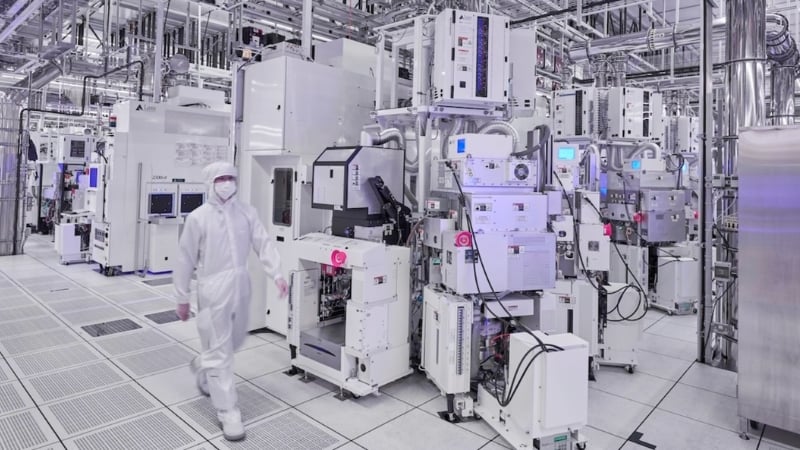
GlobalFoundries semiconductor manufacturing facility. Image used courtesy of GlobalFoundries via ISI News
The deal gives researchers, startups, and commercial developers access to GlobalFoundries process technologies through the MOSIS 2.0 storefront, spanning low-cost shared prototyping runs through full-mask commercial manufacturing. It’s the latest turn for a service that has been lowering the barrier to custom silicon for more than four decades.
From DARPA Silicon Broker to Global Service
MOSIS began at USC/ISI in 1981 as the Metal Oxide Semiconductor Implementation Service, funded by DARPA to give university and government researchers affordable access to chip fabrication. Its innovation was the multi-project wafer, a model that combined many customers' designs onto a single wafer so each paid only for the area it used, turning a job that cost tens of thousands of dollars into something a research group could afford.
ISI staff, including Danny Cohen and George Lewicki, built the workflow around the ARPANET, accepting designs electronically and returning packaged parts—one of the earliest working examples of electronic commerce over the network.
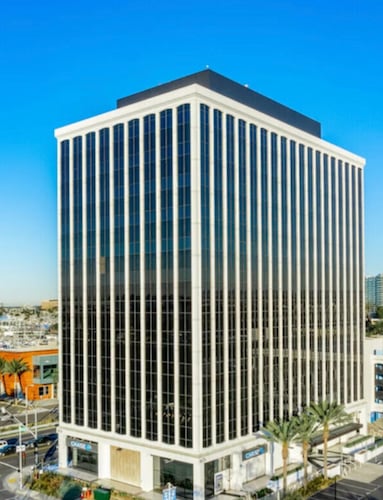
The MOSIS service headquarters, part of the USC Information Science Services in Marina Del Rey, California. Image (modified) used courtesy of USC
The service scaled from there. By mid-1985, it had fabricated more than 1,700 designs in a single year, and a joint DARPA and NSF program extended access to universities teaching VLSI design courses. Over roughly four decades, MOSIS processed more than 60,000 integrated circuit designs for over 50 U.S. government laboratories, some 800 colleges and universities, and more than 100 companies, generating up to $10 million a year at its peak. Its process menu grew to include CMOS FinFET, FD-SOI, and III-V compound semiconductors.
MOSIS 2.0 and the CA DREAMS Network
In 2023, the service was reconstituted as MOSIS 2.0, a core component of the California Defense Ready Electronics and Microdevices Superhub, or CA DREAMS, one of eight regional hubs under the Department of Defense’s Microelectronics Commons program. Where the original MOSIS shared wafers, MOSIS 2.0 shares processes, equipment, and expertise across a network of seven university nanofabrication labs, three defense industrial base fabs, and seven commercial foundries in Southern California. If a tool fails at one site, another can step in.
The relaunched service began accepting external customers in the summer of 2024 and opened its storefront that October. It now provides access to more than 350 tools and over 35 multi-project wafer shuttles, handling everything from coupon-size samples to 300-mm wafers with features below 7 nm. Each customer is paired with a dedicated engineer through the Prototype Integration and Engineering Service team.
In one early project, Northrop Grumman connected with a USC nanofabrication lab to test a new chip patterning process, and work that would normally take months of legal agreements and setup was completed in two weeks. The team has also folded AI into the network, using industrial-grade data analytics and machine learning to monitor equipment and optimize processes, work that the group says could halve the time required to develop new process flows. It has set a target of $20 million in annual revenue and self-sustainability within a few years.
The GlobalFoundries Agreement
The GlobalFoundries deal broadens what MOSIS 2.0 can offer at the leading edge. Customers gain access to GlobalFoundries' FinFET and FDX FD-SOI process technologies, along with U.S.-based RF and silicon photonics offerings, aimed at AI, 5G and 6G communications, automotive, and data center applications.
Users can start with shared shuttle runs to keep prototyping costs low, then move to full-mask production with dedicated mask sets as a design matures, with the MOSIS 2.0 team coordinating manufacturing requirements and production timelines.